
Supply chain constraints will keep plaguing automobile companies even though demand significantly improved resulting in a 13 per cent year-on-year (YoY) increase in sales in financial year 2021-22 (FY22). Executives at auto firms fear that the Russia-Ukraine war will further dent the sector's prospects of recovery as supply chains face more disruptions. "The visibility in the supply side is so hazy that it is difficult to give even one quarter projection. But all the parameters of demand like pending bookings and enquiries are increasing.

'I don't think there will be a direct reaction to the fuel price hike on air ticket prices.'

Transiting from "survival mode", which took most of the management time in FY21, the bank has been able to take a long-term view in terms of growth and preparing technology in the past 12 months.

Planemakers have started pitching their latest aircraft to a privatised Air India which has been acquired by salt-to-steel conglomerate Tata Sons. European aerospace major Airbus on Monday said that it is in talks with the airline to sell its long haul aircraft Airbus A350-900. The wide-body aircraft is capable of flying non-stop between India and United States- one of the most popular and revenue generating routes.

The slot constraint in Indian airports is also going to play a role in pushing airlines to have wide bodies.

Is the worst over for Indian banks? The past two years saw them ride on treasury trades as deposits soared and credit growth dipped sharply. Gross and net non-performing assets (NPAs) moved south, and the provision coverage ratio (PCR), capital buffers, and profitability indicators are back at pre-pandemic levels. So, what's the plot ahead?

Loans for Indian airlines have dried up as banks have become cautious to lend to the sector.

French aerospace major Thales Group is eyeing major expansion in India. The group has started planning to set up a maintenance, repair, and overhaul (MRO) organisation in India to support Indian airlines - many of which are its customers for avionics support. "We are looking to set up an MRO, so that they don't have to travel to West Asia or Singapore. "Final decision is yet to be taken, but this is a clear intent showing the growth potential in India that we are looking to set up a sub-centre here," said Yannick Assouad, executive vice-president, avionics at Thales, who was on her maiden visit to the group's India office at Bengaluru since taking charge.

The country's largest lender State Bank of India (SBI) will revamp its banking application (app) YONO and position it as a complete digital bank (DB) under a new rubric 'Only YONO' for enhancing customer experience and ease of use. The bank plans to bring in a consultant to help draw up the project plan, keeping in mind business goals for the next five years. With 54 million monthly active users (MAUs), SBI YONO has seen growth of over 35 per cent in MAUs in 2021.

Amid a rush of sport utility vehicle sales, Volkswagen is betting on its premium mid-sized sedan - the Virtus - to gain market share in India. The Volkswagen Virtus is the second product under the India 2.0 project being developed on the MQB-A0 IN platform, with up to 95 per cent localisation levels. In February, the company registered an 84 per cent year-on-year growth in sales, primarily driving on the Taigun it launched last year.

With the international markets facing uncertainty after Russia invaded Ukraine and Western nations retaliated with sanctions, Indian companies are putting their international fundraising plans on hold as they wait for the markets to recover. Bankers said apart from the geopolitical crisis, international rates are hardening in anticipation of interest rate hikes by the US Federal Reserve to control rising prices in the US. The Ukraine situation has implications for the market. In such a situation, international investors try to shift to safe haven assets by exiting from emerging markets.

Zombies a.k.a perpetually loss-making firms in India seem to have dampened the effectiveness of monetary policy at the margin as they use borrowed resources more for their survival than for undertaking new investment, according to a RBI study. The monetary policy does not hinder the creative destruction process by misallocating credit flows to zombies during periods of economic slowdown, showed a study by officers of Reserve Bank of India. It has been published in RBI's bulletin for February 2022. In India, zombie firms are estimated to account for about 10 per cent of total debt of the non-financial corporate sector.

Commercial banks in the country continued with their improving asset quality trend in the October-December 2021 quarter with slippages remaining under control coupled with healthy recoveries and upgradation of asset classification. The 28-listed banks reported improvement in bottom line with net profits rising 64.1 per cent year-on-year (YoY) and 21.5 per cent sequentially. This is mostly on account of a fall in provisions and contingencies.

'Government shouldn't be in the business of running airlines, instead it should develop the ecosystem of civil aviation.'
This is following revival of demand from the corporate sector and small and medium enterprises (SMEs), even as a nascent economic recovery is taking shape. Credit growth of scheduled commercial banks had accelerated to 9.2 per cent year-on-year (YoY) by the end of December 2021 after breaching the 7 per cent-mark in November, for the first time since April 2020.

Ford, which had announced to quit the Indian market last year, said it was exploring the possibility of using one of its plants in India to produce electric cars for exports.

The Tatas have the know-how to quickly close deals which can otherwise get caught in legal wrangle. In 2018, on the day the National Company Law Tribunal declared Tata Steel as the winner of the bid for bankrupt Bhushan Steel, Bhushan promoter Neeraj Singhal was planning to file for a stay order. He did get the case listed for the following day, but the judge did not admit it, deferring it until the following week. The Tatas used the narrow window of 48 hours to close the deal and take control of the company.
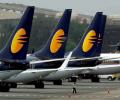
The consortium of UAE-based businessman Murari Lal Jalan and UK-based private equity fund Kalrock Capital is rushing to restart Jet Airways' operations, even though differences have emerged over who will fund expenses before operations commence, sources said. The airline applied to the Directorate General of Civil Aviation (DGCA) for recertification of its air operator certificate in the last week of January. The regulator is likely to inspect the airline's preparedness to operate a flight in the middle of this month, after which it will be asked to operate a proving flight to demonstrate its ability to conduct flights safely and in accordance with rules.
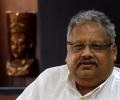
Veterans in the travel industry, a well-known corporate lawyer, and a marquee US-based hedge fund have backed the upcoming low-cost airline Akasa Air. Founded by former Jet Airways chief executive officer (CEO) Vinay Dube, the venture counts ace stock trader and investor Rakesh Jhunjhunwala as its biggest financial backer with an investment of around Rs 300 crore. A person with knowledge of the development said most of the people were well known to Jhunjhunwala and Dube, who approached them during the conception stage.

Airline executives said the rule is conflicting as regulator's own rules permits a passenger to carry multiple other things like laptop bag, ladies' hand bag, blanket, item bought at duty free shops, reports Arindam Majumder.
 © 2026 Rediff.com - Investor Information - Advertise with us - Disclaimer - Privacy Policy - Sitemap - Feedback - About us - Terms of use - Grievances